 Extraordinary but real
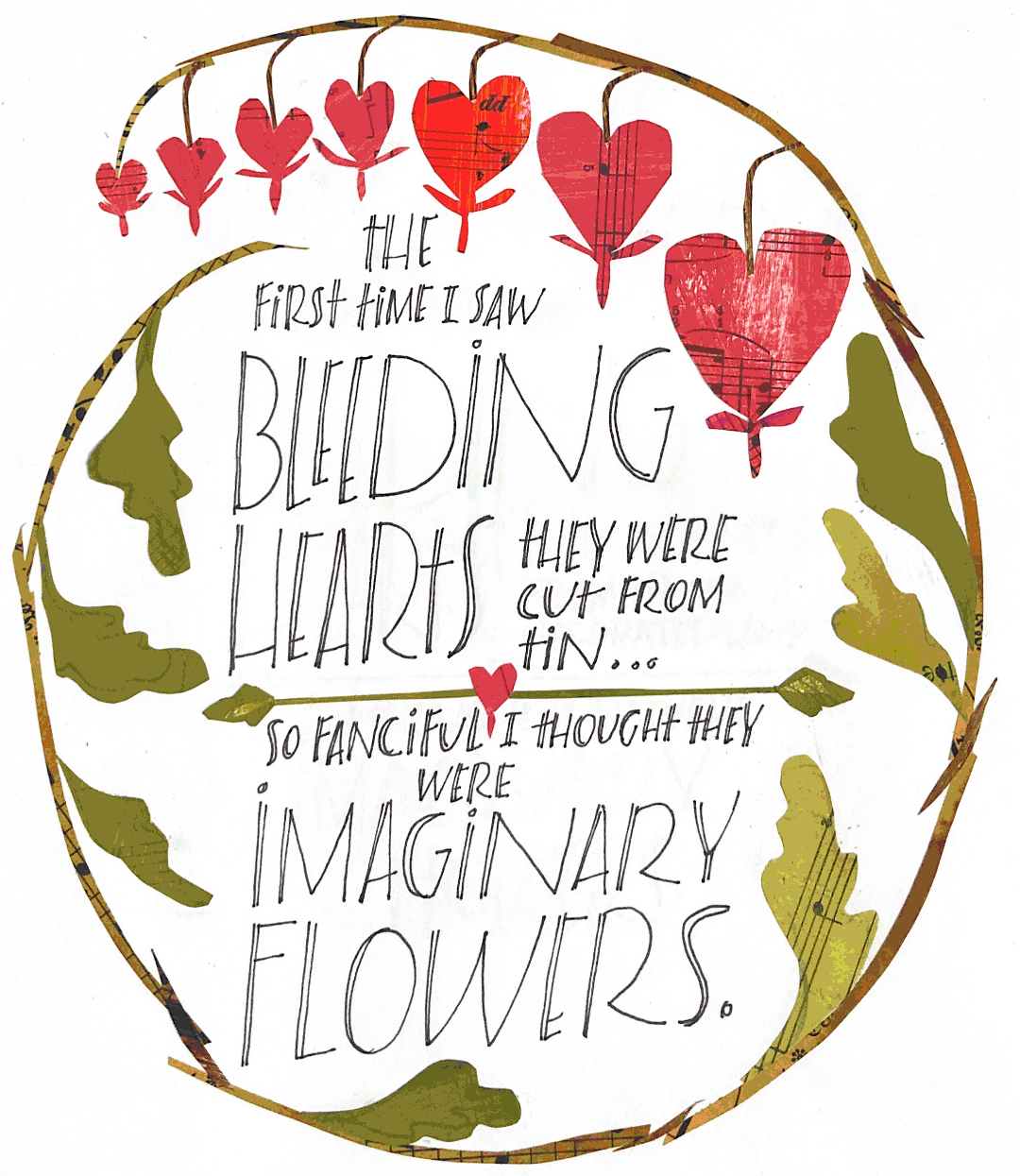
The first time I saw what I would later learn was a bleeding heart plant, I thought it was a fanciful creation. Imaginary flowers created by some skilled craftsperson with an affinity for hearts. We’d been invited by friends to join them for the weekend at the family “home,” a second home that went back generations. Though no one lived in house, it was occupied regularly by different members of the extended family, often in the way we were using it: a weekend get-away, a few days in the country. It was a grand old farmhouse with an eclectic mix of antique furniture, professionally painted portraits, pillow-soft sofas, a staircase off the living room and another in the kitchen, threadbare bedspreads, a large lawn, formal garden, and a hand-crafted lamp with bleeding hearts cut from tin. The bleeding hearts were a life-size decorative element at the base of the lamp. The tin hearts were painted pink, pierced, and threaded with wire to hang and sway like the real thing. I’d never seen such a plant and the heart shapes seemed too extraordinary to be real. It was only years later when I saw a bleeding heart plant growing in someone’s garden did I learn they were real. It’s clear the lamp was inspired by nature, but I wonder ... was it created to mirror a passion for gardening? After all, there was that formal garden. Or was it a way to explore the potential of cut metal? Maybe it was simply a one-and-done hobby project. Looking back It’s spring here in Maine and the bleeding hearts are in bloom. Seeing them always reminds me of that lamp. Of my doubt. How I admired the skill and artistry of the lamp, but scoffed at the idea of heart-shaped flowers. My ignorance colored my perception of what I was looking at. I realize now the artist must have been inspired by one or all of the elements that made the lamp what it was: the flowers, nature, their craft. And how, by creating a lasting reminder of the plant, they preserved a moment in time. Sharing matters I’m in the early stages of journaling, but I see that no matter what we create, the materials we use, or the subject we choose to represent, by giving it form, we’re able to share it and touch others in ways we’ll never know. The artist who created that lamp will never know how much I think about it, what I learned from it, what it means to me. Or how I wish it was in my living room. So share your art, your craft, your writing. You never know who's looking. What are you working on?
2 Comments
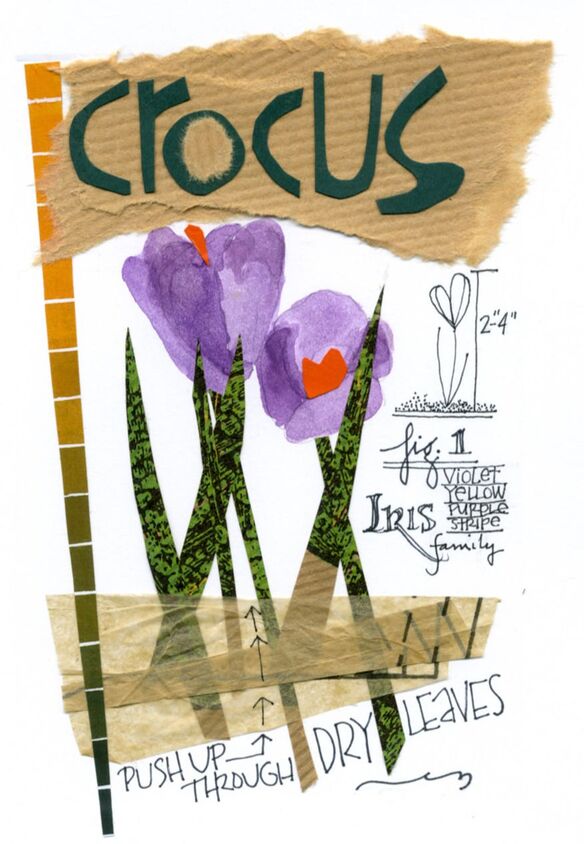 Craft Month From one crocus to another ... the art of craft and collage When I started doing collage, I worked with different papers, inks, and paints. The crocus above is an early collage. Lots of different papers, some watercolor, and some handwriting. I enjoyed creating the collage, but as I moved to other pieces, finding papers to match what I had envisioned became more and more difficult. And frustrating. So I set it aside. Until I discovered sheet music. Three big books of sheet music at a yard sale ... 25¢ each. It was the end of the day and the books were headed for the dump. My early attempts at collage somehow brought me to see these books as something other than what they were. And I understood: Sheet music would be the base paper for my collage work. 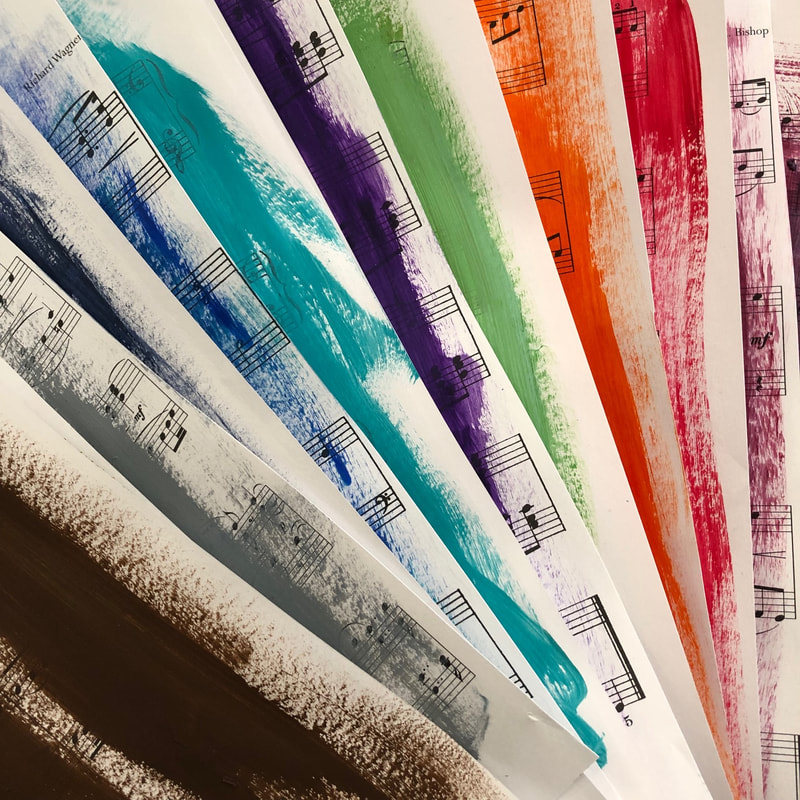 When I got the books home, I painted full-size sheets in a rainbow of colors. Painting the sheet music gave me a full range of color and where the music comes through, I found unexpected textures. By limiting myself to these painted sheets, I focused more on the objects and image I wanted to create and less time searching for materials. 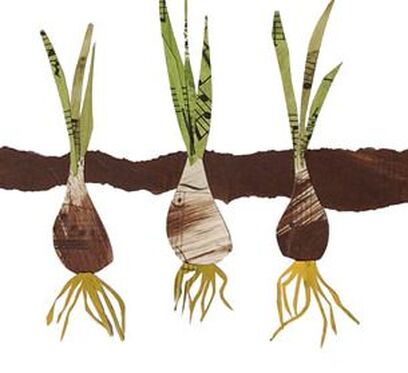 I never would have expected to enjoy it so much. Collage is a forgiving art form. While there's something precise about what I create, there is a lot of room for interpretation. 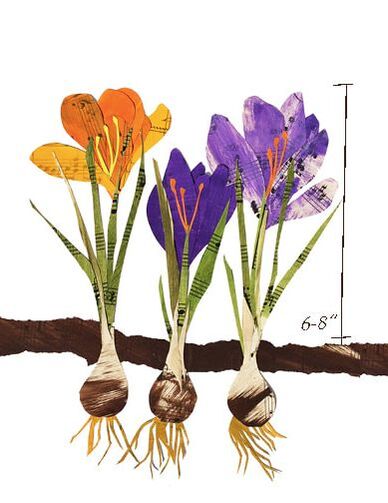 Like the bulbs we plant in the fall, our ideas may lie dormant for months, or even years, before we're inspired to take the next step. In my early collage work I see things I would change, but I still like it. It reminds me that there's a process. That it takes time to develop a skill. And that starting is the only way to get to something more, something better.
It may take a few seasons to get it right, but when it does, the project (and you) will blossom in ways you could never have imagined. March is Craft Month, a good month to start or revisit a project. What are you working on? Let me know. Maybe it's something I'd like to try! |
Whistlestop Blog
Enjoy a story and find inspiration to write one of your own. 
Your FREE workbook with 10 ways to jump-start your writing and 10 tips to make it better.
Categories
All
|